
How much does cataracts surgery cost in Singapore?
Cost is often a concern when it comes to a surgical procedure - and rightfully so. For most people, cataracts-removal surgery, also known as phacoemulsification, and the insertion of an intra-ocular lens (IOL) which is an artificial lens to replace the original cloudy lens that was removed from the eye, is a life-changing experience that is only done once (for each eye, that is).
Here, we break down the different costs and make it clear for you, just like the cataracts surgery aims to do.

A quick number for a private hospital bill: $7,115 to $10,042. This is based on official data from 2023, based on day surgery (not staying overnight) at private hospitals. But let's get a fuller picture, shall we?
Facility Charge
You may choose between doing your procedure in the hospital or at a surgery centre. This depends on your preferences, and sometimes dependent on which your insurance policy allows for, based on the insurer's agreement with the facility provider. In general, we expect a surgery centre that specialises in provding day surgery facilities to be at a lower cost than a full-service hospital. For a surgery centre, the cost estimate is $1600 to $2200, while for a private hospital it is $2700 to $4700. This is based on our own experience.
Surgeon Fee and Anaesthetist Fee, and Attendance Fee
The surgeon fee is between $2900 to $4400.
The anaesthetist fee is $550 to $900.
The attendance fee is typically between $230 to $450.
The surgeon fee, anaesthetist fee, and attendence fee is taken from the MOH Fee Benchmark for a unilateral (one side) cataracts removal of Table 4A (indicating how complex the surgery is). If the surgery is more complex or if another surgery is done together with the cataracts removal surgery, for instance a minimally invasive glaucoma surgery (MIGS), then the costs will expectedly be different. These benchmark fees is a recommendation by MOH as a reasonable fee range for a routine and typical case.
When using insurance for the procedure, the insurer may set a fee benchmark for the surgeon and anaesthetist to follow, especially for surgeons that are on the panel for the insurance. This ensures that the insurer is not 'hit' with a bill that is beyond their expectations. Hence, in such cases, the final bill to the patient may be more predictable, since it would not typically exceed a certain amount.
IOL Cost
The average cost of implant, based on what we see from official data, is $1620. But let's look at it deeper. There are different types of IOLs - you can read about the differences here. Hence, a logical estimate would be $1000 for a monofocal IOL, and $2000+ for a toric multifocal or EDOF IOL.
As with the surgeon and anaesthetist fees, if you are using insurance, the insurer may set a benchmark fee that has to be followed except for exceptional cases. Do note that most insurance will only cover monofocal lenses, in the spirit of providing the necessary medical intervention. Toric IOLs that correct astigmatism, multifocal IOLs or EDOF IOLs that allow for a larger range of vision from distance to near are premium products that are 'good to have' and not strictly a medical necessity and hence not covered.
Tests and Medications
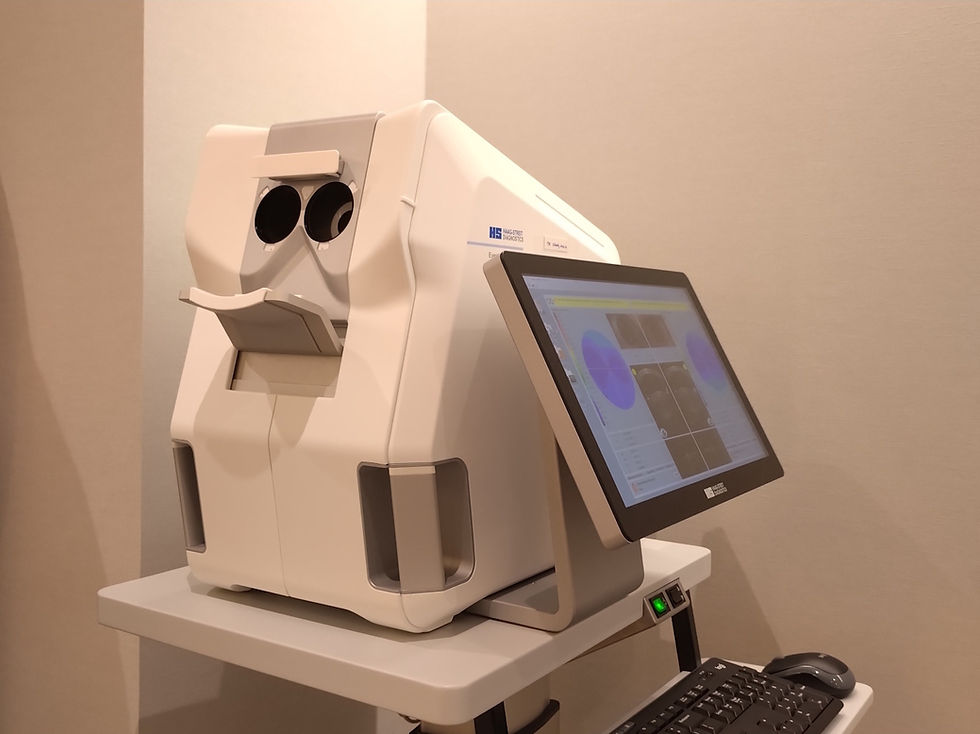
Tests such as a slit lamp examination to determine the extent of the cataracts, and biometry to determine the eyeball length and other parameters in order to provide data for IOL selection will also add to the cost of your cataracts surgery.
In addition, follow up visits are necessary to ensure that there is no infection or excessive inflammation, as well as to assess how the eye is healing. The first follow up is typically on the next day, followed by a few days or one week later, then subsequently at further intervals.
Depending on the exact number of visits and tests required, as well as if other eye conditions are also being monitored and treated during the visits, a fair estimate would be $1500 to $2000.
Insurance Deductible and Co-Payments
A deductible is the fixed amount you must pay first before your insurance starts to contribute. If your deductible is $2,000 and your hospital bill is $10,000, you pay the first $2,000, and the remaining $8,000 is then eligible for insurance claims (subject to co-payment).
A co-payment is the percentage of the remaining bill that you share with the insurer after the deductible has been met. Continuing the above example, if the co-pay is 10%, then of the $8,000, you will have to pay $800 while the insurer covers the rest.
It would be good to know about your insurance policy, if you have one. This will allow you to quickly calculate how much will your cost be after the coverage provided by your insurance plan. The deductible and co-payments can also be affected by the surgeon that you choose - depending on the insurance's list of panel and extended panel doctors.
Conclusion
As you can see, based on the above, the final cost that you would have to fork out can vary quite a bit, which is why giving a fixed fee as a simple answer is quite an irresponsible thing - since it wouldn't be accurate anyway.
But - we all want reasonably accurate calculations, and that is why we do financial counselling for patients who want to undergo cataracts surgery - this allows our patients to better understand the costs associated with the operation in accordance with their individual circumstances, such as whether they have insurance or not, as well as the follow-up visits, and choice of IOL implant. This works in tandem with the information about the insurance plan that the insurer or insurance agent will know fully about and be able to best advise.

